5 Real-Life Tips for Keeping Healthy Habits During a Long Hospital Stay
I spent eleven days in a hospital bed last year, and by day four I felt like I was dissolving. My muscles ached from lying still, the fluorescent lights had erased my sense of night and day, and every meal came on a tray that seemed designed to undo whatever health I had left. But somewhere between the third IV bag and a plate of gray chicken, I realized I had a choice: let the hospital strip away every healthy habit I’d built, or fight for tiny pieces of normal. That fight taught me more than any pamphlet could. Here are five real-life tips for keeping healthy habits during a long hospital stay—things I wish I’d known before my own body started to forget what wellness felt like.
Introduction: Why Your Hospital Stay Doesn’t Have to Derail Your Health
When you’re admitted for a long stretch, the default hospital environment works against almost every healthy rhythm you’ve built. Sleep is interrupted every two hours for vitals. Movement is discouraged by railings and IV poles. Food arrives at odd hours, and the options lean toward white bread, sugary juice, and processed meat. It’s easy to feel like your only job is to lie there and get poked. But here’s the truth I learned the hard way: maintaining habits during hospitalization isn’t about perfection—it’s about preserving your sense of agency. Each small act of self-care, from asking for a later breakfast to doing ankle pumps under the blanket, sends a signal to your brain that you’re still in charge. And that mindset, research suggests, can actually speed recovery. So no, your hospital stay doesn’t have to derail your health. You just need a different playbook.
1. Advocate for Your Routine: Communicate Your Needs to the Care Team
The biggest mistake I made on day one was staying quiet. I assumed the nurses and doctors knew best about everything, including my sleep schedule and meal timing. But they don’t know your body’s rhythms unless you tell them. On my third day, I finally spoke up: “I normally wake up at 6:30 and like to sit up for breakfast before any morning blood draws.” The charge nurse blinked, then nodded. From then on, they adjusted my lab schedule by thirty minutes. That small win made me feel human again.
Here’s what I recommend: as soon as you’re admitted, ask for a brief conversation with your primary nurse or a patient advocate. Share your pre-hospital habits—your typical bedtime, preferred meal times, any daily movement routine, even how you manage stress. Be polite but direct. Say something like, “I know medical needs come first, but I’d like to keep my usual wake-up time and have meals closer to what I’m used to. Can we work that in?” Most care teams are happy to accommodate when they understand your priorities. Just remember: safety always overrides preference. If a medication requires a 2 a.m. check, you’ll still be woken up. But you can negotiate the rest.
One specific tip: ask if the hospital has a “patient preferences” section in your chart. Some electronic health records allow nurses to note your routine. I didn’t know this until day six, and it would have saved a lot of repetition. Worth asking about.

2. Move Your Body (Even When Bedbound): Simple Exercises for Mobility and Circulation
I’ll be honest: I hate bed exercises. They feel pointless and awkward. But after four days of near-total stillness, my legs started to ache, and a physical therapist warned me about deep vein thrombosis. That got my attention. So I started small. Ankle pumps—pointing and flexing my feet twenty times each hour—became my secret weapon. Then leg lifts while lying flat, just six inches off the mattress. By day eight, I was doing seated marches on the edge of the bed, holding the rail for balance.
Here’s my real-life checklist, but run it by your doctor first:
- Ankle pumps (20 reps per foot, every hour) — keeps blood moving and prevents clots.
- Quad sets (tighten thigh muscle, hold 5 seconds, release) — fights muscle atrophy.
- Seated trunk twists (slowly rotate torso while sitting up) — maintains spinal mobility.
- Shoulder rolls and neck stretches — relieves tension from bad pillows and IV lines.
- Resistance band rows (if approved) — loop a band around the bed frame and pull toward you.
I kept a small notebook by my bed and checked off each set. It felt silly, but that checkmark was a tiny victory. One warning: don’t push through pain. If something hurts beyond mild muscle fatigue, stop and tell your nurse. And always get clearance from your medical team before starting any routine—especially if you have surgical wounds, lines, or monitors.
3. Nourish Your Body Without the Hospital Menu Hassles
Hospital food is famously bland, beige, and high in sodium. I lost my appetite completely by day two, which is dangerous when your body needs fuel to heal. I learned to work the system. First, I asked to speak with a dietitian. She was thrilled I cared and helped me swap the daily mashed potatoes for a double serving of steamed broccoli and grilled chicken. She also added a low-sodium option for every meal. That one conversation changed everything.
Second, I brought approved snacks from home. My sister smuggled in a bag of unsalted almonds, single-serving peanut butter packets, and a few apples. I kept them in a clear plastic bin on my bedside table. When hospital meals arrived late or looked unappetizing, I had a backup. Hydration was trickier—I’m not a fan of plain water, but the nurse let me add lemon slices and keep a large insulated bottle within reach. I set a phone alarm to drink every two hours.
One counter-intuitive tip: don’t skip the hospital meal entirely. Even if it’s not what you’d cook at home, eating something—especially protein—helps maintain muscle mass and supports immune function. If the menu is truly terrible, ask if you can order from a “patient choice” menu or if friends can bring food that meets your dietary restrictions. Many hospitals allow outside food as long as it’s properly labeled and stored.
4. Protect Your Sleep and Mental Health in a Noisy, Bright Environment
Sleep might be the hardest healthy habit to preserve in a hospital. Between beeping monitors, hallway chatter, and staff checks, I averaged maybe four hours of broken sleep per night. By day five, I was irritable and tearful. I knew I had to do something.
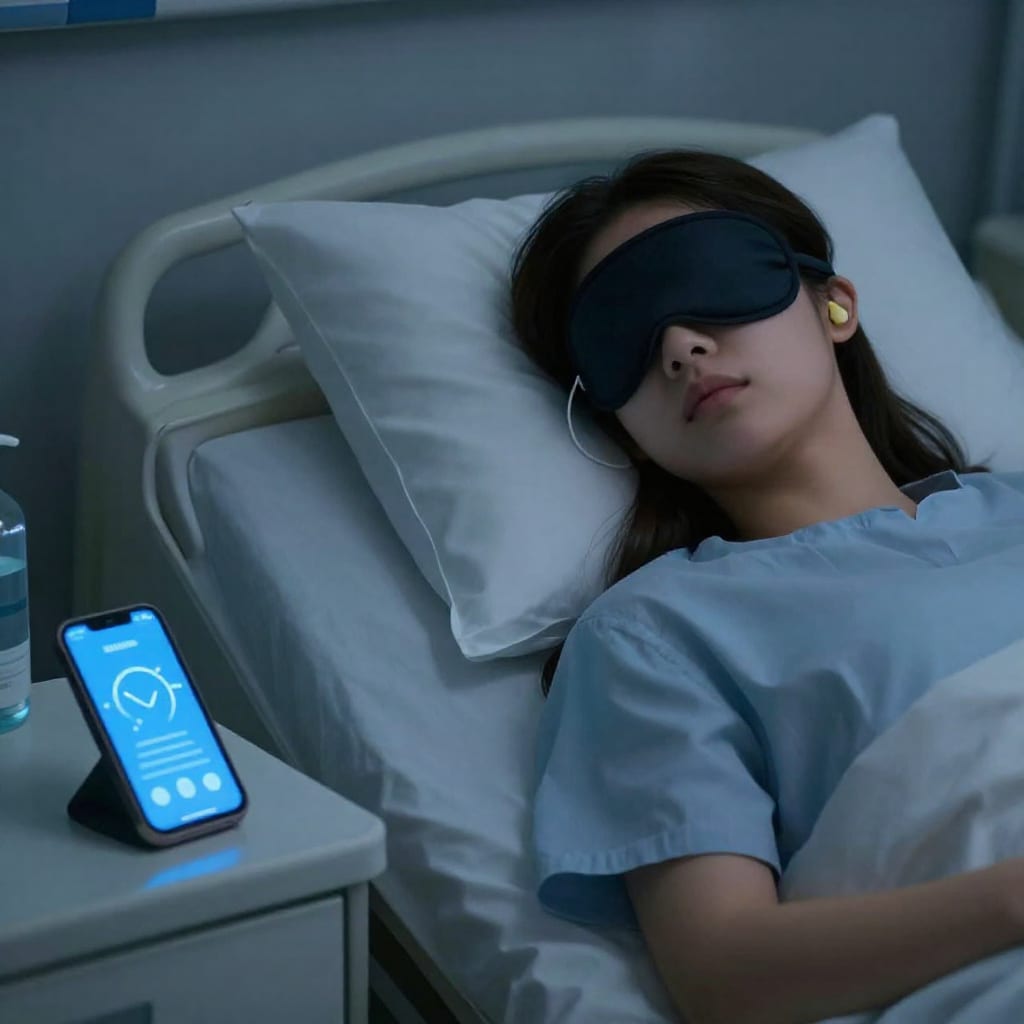
My solution was a three-part sleep kit: a silk eye mask (blocks light better than any blackout curtain), foam earplugs (the kind that expand to fit your ear canal), and a white noise app on my phone playing rain sounds. I also asked my night nurse if she could cluster my checks—take vitals and blood draws all at once rather than spaced out. She agreed, as long as clinical needs allowed. That cut my awakenings from five to two per night.
For mental health, I kept a small journal. Every evening, I wrote three things I was grateful for that day—even if one was “the ice chips were actually cold.” It sounds cheesy, but it anchored me. I also scheduled short video calls with my partner and a close friend, timing them when I knew I’d be alone and not too tired. Seeing a familiar face helped more than any medication.
One surprising insight: the constant noise and light can actually trigger a stress response that slows healing. By protecting my sleep, I wasn’t just being comfortable—I was actively supporting my recovery. That reframe made it easier to insist on my eye mask and earplugs, even when I felt self-conscious.
5. Create a Mini Sanctuary: Personalize Your Space for Comfort and Motivation
Your hospital room is a blank, sterile box that can feel oppressive. I learned to claim it. On day two, I taped a photo of my dog on the wall opposite my bed. I set my phone to play a playlist of songs that made me feel strong—not sad, not angry, just capable. I asked my nurse if I could bring in a small plant (she said yes, as long as it wasn’t soil-based—a succulent in a sealed terrarium worked).
I also created a daily checklist on a small whiteboard I’d brought from home. Each morning, I wrote three goals: “Walk to the bathroom once,” “Eat all the protein at lunch,” “Call Mom.” Crossing them off gave me a sense of purpose that the hospital schedule couldn’t provide. I kept a book on the bedside table, not because I always read, but because it reminded me I was still a person who had interests beyond my diagnosis.
One practical note: check the hospital’s policy on personal items before you bring anything. Most allow photos, small electronics, and non-perishable snacks, but scented candles, flowers (for some oncology floors), and heavy blankets may be restricted. Ask your nurse what’s allowed—they’ve seen every hack and can tell you what works.
Conclusion: Small Wins Add Up—You’re Still Caring for Yourself
I won’t pretend I followed every tip every day. Some days, all I managed was to drink water and do ten ankle pumps. But those small wins stacked. By the time I was discharged, I hadn’t lost as much strength as I feared, my sleep cycle wasn’t completely wrecked, and I felt like I’d actively participated in my own recovery rather than just being a passive patient. The real takeaway? A long hospital stay is hard, but you don’t have to surrender every healthy habit you’ve built. Start with one tip from this list—maybe it’s asking your nurse for a later breakfast, or packing an eye mask—and see how it feels. You’re still caring for yourself, even in a hospital gown. And that matters more than you think.